Overview
Playing Style
-
Power-Focused Playing Style
This style suits players who thrive on generation strong, top end speed through longer and forceful strides. They come with a stiffer boot that efficiently transfers energy into the rink for maximum power with every stride.Acceleration-Focused Playing Style
For players who rely on quick bursts of speed and agile movements to dominate the game, this type of skate is ideal. These offer a moderately stiff boot that balances support with mobility. These these skates, you can swiftly change direction, make sudden moves and accelerate rapidly.
Fit Profile
-
If multiple categories are selected, it indicates the skate is available in or can be molded to different fit profiles.
Low Profile Fit
Narrow forefoot, narrow heel pocket, shallow instep depth and low overall volume.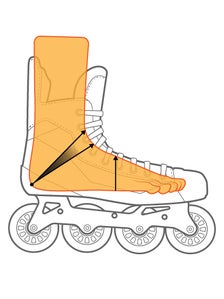
Medium Profile Fit
Medium forefoot, medium heel pocket, medium instep depth and medium overall volume.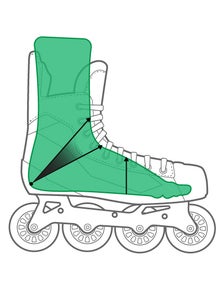
Shop All Medium Profile Skates
High Volume Fit
Wide forefoot, wide heel pocket, deep instep depth and high overall volume.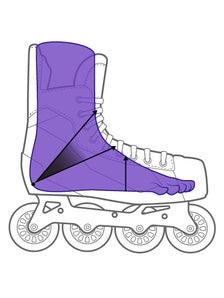
Level of Play Definitions
-
If multiple categories are selected, it indicates the skate is suitable for multiple levels of play.
Recreational-Level Skates
Built for the new-to-hockey player or casual skaters that are looking for an affordable option. These are great starter skates, especially for youth players.
Shop All Recreational Skates.Performance-Level Skates
Designed for players who are confident in their skating stride and are ready to take their performance to the next level. These players are on the rink 1-2 times a week playing mid-to-high level hockey.
Shop All Performance Skates.Elite-Level Skates
Engineered for the best performance, protection, durability and comfort. These players are usually on the rink three times or more a week and are playing high-level hockey.
Shop All Elite Skates.
Cut Protection Level
-
This is the general level of protection against cuts.
- Minimum: Basic protection suitable for competitive play
- Standard: Balanced protection for intense gameplay. Protects against more severe cuts.
- Maximum: Highest level of cut resistance for elite gameplay. Ideal for competitive adult hockey and designed for the biggest and fastest players.
ANSI Rated Cut Level
-
Measures the actual cut resistance of materials based on the ANSI/ISEA 105 standard.
ANSI Level Description Grams of Force N/A No specific cut resistance rating provided by the manufacturer. N/A A1 Minimal protection; withstands light cuts. 200-499 A2 Lower-level protection; resists slightly heavier cuts. 500-999 A3 Low-level protection; suitable for competitive play. 1,000-1,499 A4 Standard protection; defends against significant cuts. 1,500-2,199 A5 Elevated protection for intense play. 2,200-2,999 A6 Extra protection for faster, higher-impact play. 3,000-3,999 A7 Ultra-high protection. 4,000-4,999 A8 Premium protection for all levels of play and ages. 5,000-5,999 A9 Top-tier cut resistance for ultimate protection. 6,000+
Certifications
-
Indicates compliance with safety standards and regulations for hockey gear.
- USA Hockey: Approved for play under USA Hockey regulations. Ensures gear meets safety standards for organized play in the United States.
- BNQ: Certified by the Bureau de Normalisation du Quebec for cut-resistant hockey gear. Required for players in Canadian Minor Hockey leagues to ensure on-ice safety.
- CE: Meets European safety standards for protective equipment. Designed for compliance with regulations across European leagues and recreational play.
Click on the image to see the back cover.
The 7 Pre-game Habits of Pro Hockey Players book offers a step-by-step guide to pre-game preparation to play at your best for every game. Everyone from squirts to the NHL players will learn specific techniques that will raise their game to the next level.
The 7 Pre-Game Habits of Pro Hockey Players addresses mental and physical preparation. Specifically in the 24 hours leading up to a game and immediately following that creates a consistent high energy level. Combine eating right, stretching, and hockey specific warm-up games to get your body into "The Zone."
This book teaches you in a step-by-step manner how to:
- How to create visualizations (mini-movies) to instill more confidence before stepping onto the ice
- Why your pre-game stretching routine may be making you physically weaker before the game even begins
- How to control you emotions immediately using an “anchor”
- How to use a breathing pattern to eliminate anxiety before a penalty shot
- What to eat/drink before, during, and after a game for optimal performance
- How a routine dials in your focus and gets rid of distractions
- What to eat when the bus stops at fast food restaurants, so your game performance is not affected
Written by Brett Henning. Brett is a member of the Inaugural National Development Team and 2000 World Junior Team with USA Hockey. Brett Henning also played Jr. Hockey in Canada and at the collegiate level of the University of Notre Dame. He was drafted by the New York Islanders before a back injury ended his on-ice career.
Specifications
Table of Contents:
Frequently Asked Questions
Foreword
- Visualization: Background on visualization, how to visualize, how to get over a slump
- Breathing: Shootout Preparation (circle breathing), flexible breathing, breathe counting, quick breaths, low breathing
- Controlling you emotions: anger, fear, jealousy, frustration, defeated (will to win)
- Stretching: dynamic stretching (warm-up)
- Games: feet and concentration, reaction time and quick hands
- Nutrition: key's to optimal performance (hydration, carbohydrates, proteins, fats, daily nutrition schedule, breakfast, lunch and dinner, fruits and vegetables, post exercise, grocery list, traveling strategies, how to cook, sleep)
- Routines: what is a routine, your current routine and developing a new one
- Top 8 mistakes amateurs make
- Ending chapter