Overview
Playing Style
-
Power
A Power-Focused Playing Style suits players who thrive on generating strong, top-end speed through forceful and longer strides. They come with a stiffer boot that efficiently transfers energy into the rink for maximum power with every stride.
-
Acceleration
An Acceleration-Focused Playing Style is ideal for players who rely on quick bursts of speed and agile movements to dominate the game. These offer a moderately stiff boot that balances support with mobility. You can swiftly change direction, make sudden moves, and accelerate rapidly with these skates.
Fit Profile
If multiple categories are selected, it indicates the skate is available in or can be molded to different fit profiles.
-
Low Profile
Narrow forefoot, narrow heel pocket, shallow instep depth, and low overall volume.
-
Medium Profile
Medium forefoot, medium heel pocket, medium instep depth, and medium overall volume.
-
High Profile
Wide forefoot, wide heel pocket, deep instep depth, and high overall volume.
Level of Play Definitions
If multiple categories are selected, it indicates the skate is suitable for multiple levels of play.
-
Recreational Skates
Recreational roller hockey skates are built for the new-to-hockey player or casual skaters that are looking for an affordable option. These are great starter skates, especially for youth players.
-
Performance Skates
Performance-level roller hockey skates are a great fit for players who are confident in their skating stride and are ready to take their performance to the next level. These players are on the rink 1-2 times a week playing mid-to-high level hockey.
-
Elite Skates
Elite-level roller hockey skates are built for the best performance, protection, durability, and comfort. These players are usually on the rink three times or more a week and are playing high-level hockey.
Cut Protection Level
This is the general level of protection against cuts.
-
Minimum
Basic protection suitable for competitive play
-
Standard
Balanced protection for intense game play. Protects against more severe cuts.
-
Maximum
Highest level of cut resistance for elite gameplay, designed for the biggest and fastest players.
ANSI Rated Cut Level
Measures the actual cut resistance of materials based on the ANSI/ISEA 105 standard.
-
N/A
No specific cut-resistance rating provided by the manufacturer.
-
A1
Minimal protection; withstands light cuts (200-499 grams of force).
-
A2
Lower-level protection; resists slightly heavier cuts (500-999 grams of force).
-
A3
Low-level protection; suitable for competitive play (1,000-1,499 grams of force).
-
A4
Standard protection; defends against significant cuts (1,500-2,199 grams of force).
-
A5
Elevated protection for intense play (2,200-2,999 grams of force).
-
A6
Extra protection for faster, higher-impact play (3,000-3,999 grams of force).
-
A7
Ultra-high protection (4,000-4,999 grams of force).
-
A8
Premium protection for all levels of play and ages (5,000-5,999 grams of force).
-
A9
Top-tier cut resistance for ultimate protection (6,000+ grams of force).
Certifications
Indicates compliance with safety standards and regulations for hockey gear.
-
USA Hockey
Approved for play under USA Hockey regulations. Ensures gear meets safety standards for organized play in the United States.
-
BNQ
Certified by the Bureau de Normalisation du Quebec for cut-resistant hockey gear. Required for players in Canadian Minor Hockey leagues to ensure on-ice safety.
-
CE
Meets European safety standards for protective equipment. Designed for compliance with regulations across European leagues and recreational play.
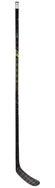
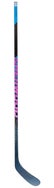
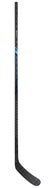
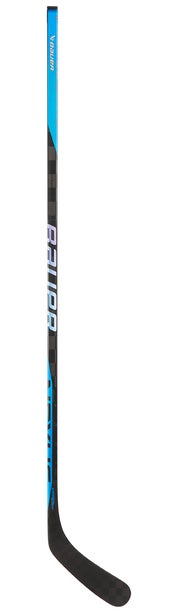
The Bauer Nexus Sync Stick brings a whole new meaning of connectedness between your hands and the game. The brand new ConnectTech Blade Technology provides enhanced puck feedback on every single dangle, shot or pass since the rubberized layer in the blade is now extended through the entire shaft.
With elevated puck feel that just feels more connected, the incredible 360 grams (85 flex) construction lets you focus on the game since the stick basically floats in the hands. The Sync uses its most advanced Asymmetrical Carbon Fiber and the Advanced Carbon Layering (ACL) 2.0 to slash weight while providing only the most effective and efficient energy transfer from the stick, to the puck and into the back of the net.
The staple of the Nexus Line has been the effortless release that has taken the market by storm from the pros to retail. The ER Spine Technology is the driver with its five-sided shaft shape that requires less material and makes the Sync easier to load, which makes shooting easier and quicker to do too. To top it off, the bottom hand more naturally wraps around the five-side dimensions for a noticeable improvement in comfort and control.
VIEW BAUER CURVES
| OVERVIEW | |
|---|---|
| Level of Play | Elite |
| Flex Profile | Mid Kick |
| Weight | 365 grams (85 flex) |
| Heritage | Nexus Geo / ADV |
| Model Number | 1059835 |
| Available Flexes | 30, 40, 50, 55, 65, 70, 77, 87 |
| (Note: All products are independently weighed and measured at IW Hockey with a 5% variance.) | |
Specifications
| KEY TECHNOLOGIES | |
|---|---|
| ConnectTech Blade Technology The responsive rubber layer in the blade of previous Nexus sticks gave players puck feel that no other stick had before. With the material now extended throughout the entire stick, the connectedness between the hands and the puck has never been closer or more dialed in. | |
| Optimized, Asymmetrical TeXtreme Carbon Fiber With their most advanced material, they further improve the impact durability by reinforcing key areas targeted during intense R&D. | |
| Advanced Carbon Layering (ACL) 2.0 The new carbon fiber allows Bauer to create even thinner layers than ever. Through more strategic arrangements of these fibers, the Nexus Sync is lighter and more efficient at transferring energy without comprising strength. |
| SHAFT | |
|---|---|
| Construction | MonoComp One-Piece ER Spine Technology |
| Materials | Asymmetrical TeXtreme Carbon Fiber |
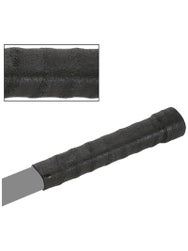
| Grip Finish | Tacky Grip |
| Shaft Dimensions | Square Corners, Concave Sidewalls |
| Stick Lengths | 62" (87, 77 flex) 60" (70 flex) 57" (65, 55 flex) 54" (50 flex) 52" (40 flex) 50" (30 flex) |
| FLEX PROFILE | |
|---|---|
| Kick Point | Mid Kick |
| Shot Profile | Versatile, all-around playmaker |
| Shaft Taper | Standard |
| BLADE | |
|---|---|
| Construction | ConnectTech Blade Technology |
| Materials | TeXtreme Carbon Fiber Rubber Feel Layer Carbon Fiber Bridge |
| Face Texture | Textured |
| Available Curves | P28, P88, P92, P92M VIEW BAUER CURVES |
| MANUFACTURER WARRANTY | |
|---|---|
| Composite Stick | 30 Days |
| Contact | Bauer Direct |
Videos
Sizing Chart
| GENERAL STICK FLEX AND SIZING RECOMMENDATION | |
|---|---|
| We recommend choosing the hockey stick flex that puts your specific height and weight at the middlemost point in both categories. A common rule of thumb is to select a flex rating by dividing your body weight in two and subtracting another 10-15 flex points. See the flex chart and articles below for more detailed information on sizing and selecting hockey sticks. |
| JUNIOR - BAUER STICK SIZING AND FLEX CHART | ||||
|---|---|---|---|---|
| Size | Flex | Stick Length | Player Height | Player Weight |
| JR | 30 | 50" | 4'6" - 5'2" | 40 - 80 lbs |
| JR | 40 | 52" | 4'7" - 5'3" | 60 - 100 lbs |
| JR | 50 | 54" | 4'8" - 5'4" | 80 - 120 lbs |
| INTERMEDIATE - BAUER STICK SIZING AND FLEX CHART | ||||
|---|---|---|---|---|
| Size | Flex | Stick Length | Player Height | Player Weight |
| INT | 55 | 57" | 5'2" - 5'10" | 90 - 130 lbs |
| INT | 65 | 57" | 5'2" - 5'10" | 105 - 145 lbs |
| SENIOR - BAUER STICK SIZING AND FLEX CHART | ||||
|---|---|---|---|---|
| Size | Flex | Stick Length | Player Height | Player Weight |
| SR | 70 | 60" | 5'5" - 6'2" | 110 - 150 lbs |
| SR | 77 | 62" | 5'5" - 6'4" | 130 - 170 lbs |
| SR | 87 | 62" | 5'5" - 6'4" | 150 - 190+ lbs |
| (Note: Stick length is measured from the heel's point of contact with the playing surface to the top of the shaft.) | ||||
| HELPFUL ARTICLES | |
|---|---|
| How to Size a Hockey Stick | |
| How to Select a Hockey Stick | |
| How to Select a Stick Curve | |
| Bauer Stick Curve Chart | |
| IW Hockey Learning Center |