How to Put on Ice Hockey Gear
(Step-by-Step Guide for First-Time Players)
Whether you’re preparing for your first Learn-to-Play hockey clinic, joining a beginner hockey league, or outfitting your kids for the season, learning how to put on hockey equipment correctly is an essential first step. For many new players and parents, handling hockey gear for the first time can feel intimidating, which is why this guide breaks down the hockey equipment you need and the proper order to put it on. From a quick at-home practice run to stepping into the locker room with confidence, this page will help you feel prepared and ready to enjoy your first hockey experience.
Hockey Equipment Checklist
Before you get started, here is a quick recap of the essential pieces of protective gear you need to have in your hockey bag. To ensure you have proper head-to-toe coverage, these are the items you can't leave home without.
| Essential Hockey Equipment Checklist & Protection Guide | |
|---|---|
| Equipment | What It Protects |
| Helmet Cage Mouthguard |
Head, face, jaw, teeth |
| Neck Guard | Throat and neck against skate lacerations |
| Shoulder Pads Elbow Pads Gloves |
Upper body |
| Jock/Jill | Pelvic area, groin |
| Hockey Pants Shin Guards |
Lower body |
| Skates | Feet, ankles |
Along with your core protective gear, a few key accessories help complete your setup. Make sure you're ready to go with a hockey bag, base layer, jersey, hockey socks, plus stick tape and shin guard tape. For added safety, we recommend base layers that include integrated cut-resistant protection.

How to Put On Hockey Equipment
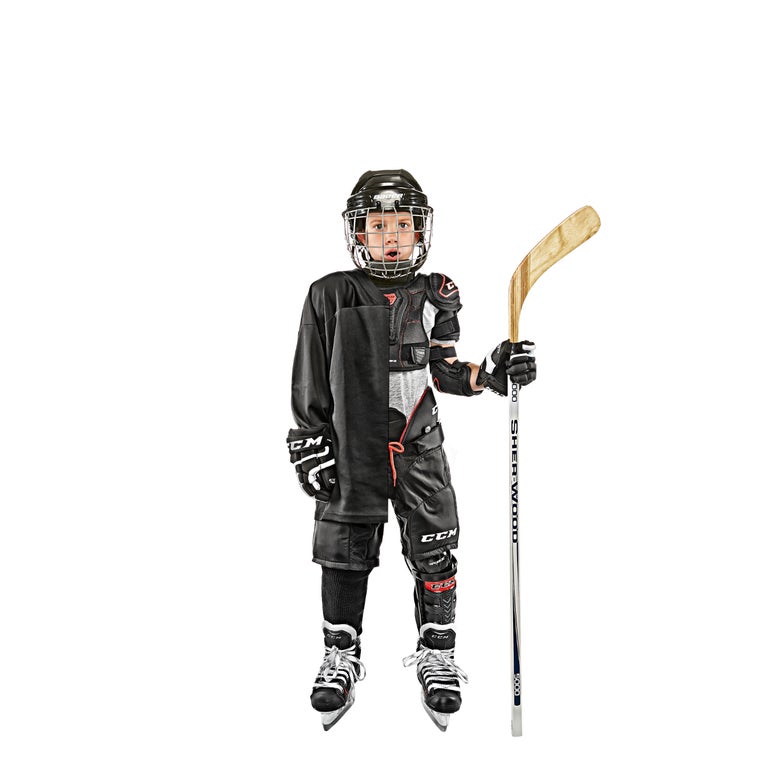
While everyone develops their own routine, most hockey players get dressed from the bottom up. This approach helps keep equipment in the correct position, improves mobility, and makes the dressing process more efficient. Below is a simple, step-by-step guide to help you put on your equipment in the correct order.
| How to Put On Hockey Equipment (Step-by-Step) | ||
|---|---|---|
| Step | Equipment | What to Do |
| 1 | Base Layer, Jock/Jill | Put on your base layer, pelvic protection (jock/jill), and skate socks. |
| 2 | Shin Guards, Hockey Socks | Place the shin guards on your legs. Pull your ice hockey socks over your shin guards and secure them to your jock/jill sock tabs or garter belt. |
| 3 | Hockey Pants | Step into your hockey pants or girdle and secure them in place. If using a girdle, add the shell over top. |
| 4 | Skates | Tie your hockey skates securely. You can wear your skate tongues over or under your shin guards based on comfort and personal style. |
| 5 | Shoulder Pads, Elbow Pads | Put on your shoulder pads, then your elbow pads. If your shoulder pads offer bicep length adjustment, fine-tune the fit for proper coverage. |
| 6 | Jersey | Put your jersey on over your upper body equipment. |
| 7 | Neck Guard, Mouthguard, Helmet | Put on your neck guard (unless it's already built into your base layer) and insert your mouthguard. Put on your helmet and make sure it's securely fastened. |
| 8 | Gloves | Put your hockey gloves on, grab your hockey stick, and you're ready to hit the ice. |
Final Pre-Ice Gear Check
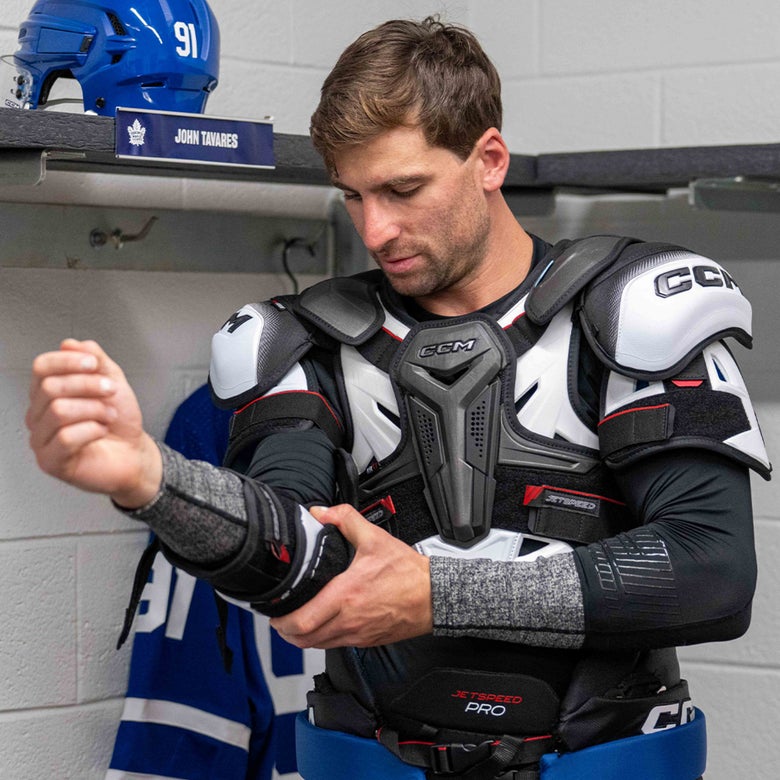
A quick gear check before you leave home and again before stepping on the ice helps avoid missing equipment, improper coverage, and last-minute issues in the locker room.
Before leaving home:
- Double-check your hockey bag
- Ensure no essential protection is missing
- Pay special attention to gear that comes in pairs: skates, gloves, elbow pads, and shin guards
Before stepping on the ice:
- Confirm all pads fit properly (no exposed gaps)
- Ensure straps are secure
- Make sure nothing feels loose or overly tight
Safety Reminder:
If a player is missing any protective equipment, they should NOT go on the ice.
Common Mistakes First-Time Players Make (and How to Avoid Them)
1. Buying Equipment That's Too Big
Most gear today comes with adjustability features, helping to eliminate the need for oversizing. Parents or growing players often size up to save money, but oversized equipment can: reduce mobility, shift during play, leave gaps in protection, and increase injury risk.
2. Not Using Cut Protection
Beginners often aren't aware of the risk of skate cuts. The areas most prone to skate lacerations are the ankles (Achilles/calves), wrists, and neck. To avoid a potentially serious injury, we always recommend wearing cut-protection to add premium coverage and reduce the chances of receiving a skate laceration.
3. Helmets That Don't Fit
A helmet that doesn't fit correctly or isn't properly secured can be dangerous. Always choose the correct size and avoid sizing up. The helmet should feel snug and stable without causing discomfort.
4. Not Wearing a Cage or Full Shield
While facial protection is required at the youth and junior levels, enforcement varies in adult leagues. Regardless of league rules, adult players are strongly encouraged to wear a cage or full shield, with a visor as the minimum option.
5. Forgetting Gear at Home
Always do a bag check before you leave the house. Start with your essential protective pieces from head to toe, followed by your base layer, gamewear (jersey and ice hockey socks), accessories, and stick.
You're now ready to hit the ice! If you're looking for more information on sizing and selecting specific pieces of hockey equipment, use the buttons below to explore our detailed guides.
How to Put on Hockey Gear FAQs
What order do I put on hockey gear?
Start with base layer followed by jock/jill, shin guards, hockey socks, pants, skates, shoulder pads, elbow pads, jersey, neck guard, mouthguard, helmet, and finished off with your gloves.
How do I know if my hockey equipment fits properly?
Each piece of gear should cover all key areas with minimal gaps between one another. They should not float, slide, or pinch, which is a sign of being too loose or too restrictive. Your helmet should not move when you shake your head or have an uncomfortable amount of pressure.
Should I size up gear so my child can grow into it?
No, oversized hockey gear reduces protection and can cause restriction in mobility. It's also more prone to moving during play which can leave key areas of the body exposed to injury. Instead, choose the correct size and utilize adjustable features that are built into the protective elements.
Do I really need a neck guard or cut-resistant base layer?
Neck guards are required in some leagues, especially for youth and junior players. Regardless of league rules, cut-resistant protection dramatically reduces injury risk and is strongly recommended for players of all skill levels.
What piece of equipment is the most important?
Your helmet and pelvic protection. Never step on the ice without a properly fitted helmet, jock or jill.
How long does it take to put on hockey equipment?
Beginners usually take between 10-15 minutes to get dressed. Once you have dialed in your routine, players can get dressed between 5-10 minutes.
How much time should I allow before a hockey game to get dressed and prepare?
Most players should plan to arrive at the rink at least 30-45 minutes before game time. This gives you enough time to get dressed without rushing, stretch and warm up, and tape your hockey stick if needed. Arriving early also helps to reduce stress and allows time to fix any gear issues, ensuring you're fully ready when it's time to step on the ice.
Do I put my skates on before or after my pants?
Skates are typically put on after your hockey pants. While some players prefer tying their skates first for added mobility, be sure your hockey pants have zippered leg openings to avoid accidentally cutting the pant shell with your skate blades.
Do shin guards go over or under the skate tongue?
This is personal preference. As long as there is no gap in protection, the setup feels comfortable, and there is no mobility restrictions, shin guards can be worn either over or under the skate tongue.
Do I need to wear a base layer to play hockey?
A base layer isn't required but it is strongly recommended. Base layers help manage sweat, improve comfort, control odor, and many now include cut-resistant protection for key areas of the body.