How to Size a Goalie Leg Pad
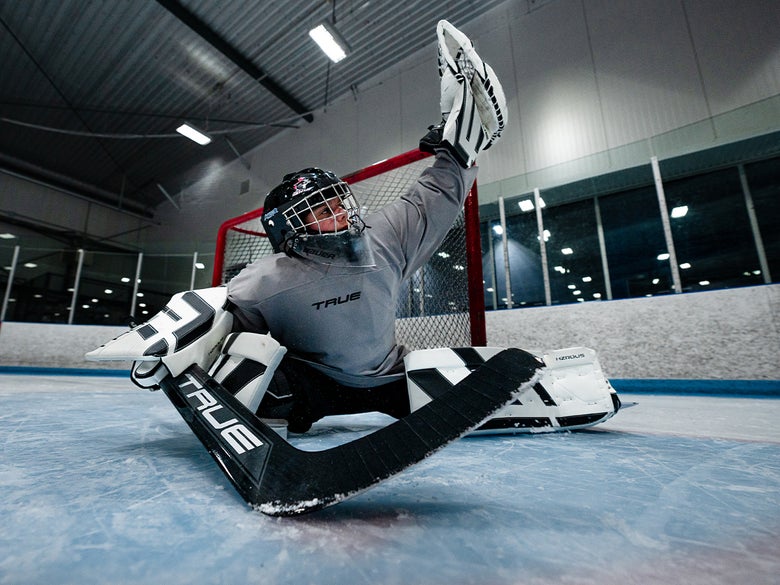
Sizing for goalie leg pads can be confusing, but the process is actually quite simple. The most important thing is making sure your knee lands comfortably and centered on the knee stack, also known as the knee block, when you drop into the butterfly position. This ensures your knee stays protected while providing optimal balance, pad seal, and comfort, resulting in fewer pucks getting by.
Additionally, a properly sized leg pad allows the pads to cleanly rotate on your leg when making transitions from a game-ready stance to the butterfly and vice versa, ensuring a smooth pad rotation so you're always ready to make the next save.
Quick Leg Pad Sizing Summary
Step 1. Find your floor-to-knee (FTK) measurement: the industry standard for leg pad sizing.
Step 2. Match measurement to the brand's sizing chart, using height as an additional factor if applicable.
Step 3. Choose your pad size. If you are between sizes, go smaller for more mobility or larger for more coverage.
Step #1: Find Your Key Leg Pad Measurement (FTK)
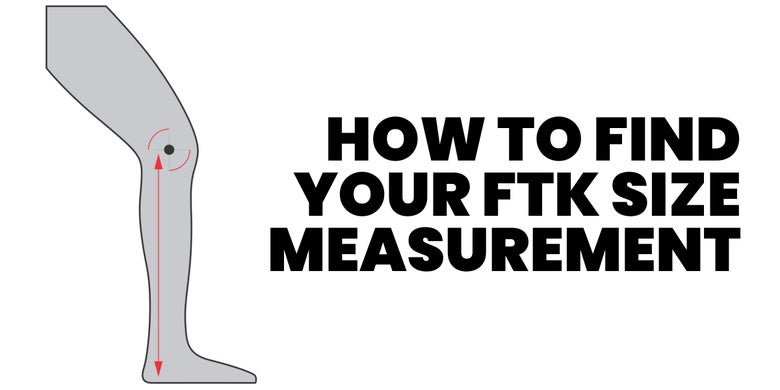
The majority of modern leg pads (CCM, Bauer, True, Warrior) use Floor-to-Knee (FTK) for leg pad sizing. FTK measures the distance from the floor to the center of your kneecap, and serves as the most reliable point when selecting pad size.
Smaller brands reference ATK (Ankle-to-Knee) instead, which is the measurement from the middle ankle bone to the center of the kneecap. While these methods differ slightly, both FTK and ATK are designed to place your knee squarely in the knee block, but FTK is the industry standard and should be your first reference unless a brand specifically instructs otherwise.
How to Measure Your FTK
- Stand up straight in socks or barefoot with your feet shoulder-width apart.
- Slightly bend your knee into a relaxed position.
- Measure from the floor straight up to the center of your kneecap.
- Write it down: FTK = _____ inches
Note: For ATK, measure from the inside ankle bone up to the center of your kneecap.
Step #2: Match Your Measurements to the Brand Size Chart
Once you have your FTK measurement, reference the brand-specific sizing chart on the product page. Each brand correlates your FTK to a specific pad size.
Some charts also include height as a secondary reference, which can help fine-tune sizing, especially if you're near the top or bottom of a size range. When height is listed, use it as a supporting data point, not the deciding factor.
Step #3: Choose Your Leg Pad Size
Once you've matched your FTK to the brand's sizing chart, select the pad size that best matches your measurements. If you're between sizes, factor in your style of play. For more mobility, lean smaller. For more coverage and seal, lean taller.
Then, use the "+" thigh rise option to fine-tune the amount of extra coverage you get above the knee, without changing the core pad size. Learn more about the thigh rise height in the next section below.
| General Goalie Leg Pad Sizing Chart | |
|---|---|
| The information below is a general sizing guideline and DOES NOT guarantee fit. The chart is not specific to any item or brand so if a product does have specific sizing guidelines on the product page, DO NOT reference the general sizing guidelines below. | |
| Leg Pad Size | FTK Measurement |
| 20" | 13.5" or less |
| 22" | 13.25" - 14" |
| 24" | 14.25" - 15" |
| 26" | 14.75" - 15.5" |
| 28" | 15" - 16" |
| 30" | 17" - 17.75" |
| 31" | 17.75" - 18.5" |
| 32" | 18.5" - 19.25" |
| 33" | 19.5" - 20.25" |
| 34" | 20.25" - 21" |
| 35" | 21" - 21.75" |
| 36" | 22" - 22.75" |

Understanding Pad Size Numbers (Example: 34"+1")
Most leg pads are labeled like the example below:
- 34": = the main pad size
- +1"= added thigh rise height
Thigh Rise (+0, +1, +2, etc.)
The "+" number on goalie leg pads indicates the added length (in inches) to the thigh rise for added five-hole coverage when you drop into the butterfly. The most common options are +1" and +2", which help goalies fine-tune coverage and mobility based on playing style. Thigh rise is a personal preference and should help you seal the five-hole without forcing the pads to overlap excessively or put strain on your hips.
- +1", +1.5": More mobility, easier closure, often preferred by most goalies.
- +2", +2.5": More thigh coverage and better five-hole seal, often preferred by goalies who play a wider butterfly or want maximum blocking surface.
- +3"+: Anything beyond this is typically a custom option, mainly geared for more experienced goalies.
| Thigh Rise Sizing Example | |||
|---|---|---|---|
| Thigh Rise Size is the measurement from the middle of the kneecap to the top of the thigh rise, which is based on a goalie's personal preference. | |||
| Pad Size | FTK | Goalie Height | Thigh Rise Size |
| 34"+1" | 20.5" - 21.5" | 6' - 6'1" | 11.5" |
| 34"+2" | 20.5" - 21.5" | 6' - 6'1" | 12.5" |
Proper Fit Checklist
Try on the leg pads with your goalie skates, pants, and knee protectors suited up. This ensures you can check key areas for a proper fit and coverage, as well as give you an idea of how the leg pads will feel during gameplay.
Proper Fit
1. Knee Landing (Most Important)
- Your knee should sit centered on the knee block when you're in your game-ready stance.
- When you drop into the butterfly, your knee should land cleanly on the center of the knee stack.
- For younger goalies looking to have some growing room, we recommend having the kneecap no more than 1" below the center of the knee stack.
2. Stance Coverage
- The pads should feel stable and balanced from ankle to knee.
- They should overlap your pants and sit comfortably on your skates, allowing you to bend down into a game-ready stance.
3. Butterfly Seal
- In the butterfly, the pads should seal together cleanly at the five-hole.
- The thigh rises should meet without a big gap, but also shouldn't touch so hard that they push apart or bind at the top.
4. Rotation and Mobility
- Your leg pads should rotate smoothly forward when you drop into the butterfly.
- If the pads feel stuck when rotating, adjust the strapping system to allow more rotation.
Improper Fit
1. Too Tall
- Knee sits below the center of the knee block
- Pads feel like they ride up your leg
- The thigh rise overlaps the pants too much
- Too much pressure on the hips when in the butterfly seal
- The pads prevent rotation when entering and exiting the butterfly
2. Too Short
- Knee sits above the center of the knee block
- You miss the knee block when dropping
- No overlap between the pants
- Five-hole doesn't have a proper seal when in the proper butterfly position
More Information
Now that you have found out what size you should wear, check out our quick buying guide below that will help you figure out what goalie leg pad style best suits your needs!
How to Size a Goalie Leg Pad FAQ's
How do I measure myself for goalie leg pad sizing?
Find your FTK (floor-to-knee) and ATK (ankle-to-knee) measurements: standing up with knees slightly bent, measure from the floor to the center of your kneecap (FTK). Measure from the inside ankle bone to the center of your kneecap (ATK). Correspond your measurement to the brand's sizing chart.
What does +1", +2", etc. mean on goalie leg pads?
The "+" number is the extra height in the thigh rise, which is above the knee area.
How should my knee land in the pand?
Your knee should land centered on the knee stack in the butterfly. If you're consistently missing it high or low, you may need a different size.
Do goalie knee pads affect pad fit and sizing?
Yes, goalie knee protectors can change how your knee sits in the cradle and how the pad rotates. Always test fit with the knee pads you plan on using.
What size goalie pads do I need?
Start with your FTK (floor-to-knee) and ATK (ankle-to-knee) measurements and compare to the brand's sizing chart. When fitting, confirm your knee lands centered on the knee block. If you're between sizes, your preference for more seal vs more mobility should be the deciding factor.
Should I size up for more five-hole coverage?
Only if you still land properly on the knee block. Sizing up can improve five-hole coverage, but make sure there isn't too much pressure on your hips and the pads don't interfere with your butterfly rotation.
Should I size goalie pads based on my height?
While height can be factored into some sizing charts, it's best to use your FTK or ATK measurements for the best accuracy. Two goalies of the same height can have different leg proportions.
How do I know if the pad is too tall?
Common signs: your knee lands low on the knee block, the top of the pad feels like it's fighting rotation, or the pad overlaps awkwardly at the top when you drop to the butterfly.
How do I know if the pad is too short?
Common signs: your knee lands high on the knee block, you lost five-hole seal, and your coverage feels inconsistent.
What are the signs that my pads are the right size once they're fully strapped?
In your game-ready stance, they feel centered, balanced, and mobile. In the butterfly, you land centered on the knee stack and get a clean five-hole seal. During butterfly rotation, the pads and thigh rise don't bind or collide.